Consumers are drinking differently. For wine producers looking towards international markets, understanding these changes may be just as important as understanding the wine itself.
The European drinks market is changing.
Consumers are becoming more conscious about how much alcohol they drink, while no- and low-alcohol beverages, functional drinks and new drinking occasions are gaining ground. But looking at this simply as a shift from “alcohol” to “no alcohol” misses a much bigger part of the story.
The real change may be this:
Consumers are becoming more selective about what they drink, when they drink it and why.
For the wine industry, this creates challenges - but also opportunities.

Drinking less does not necessarily mean drinking no wine
Recent research from Circana points to a clear shift towards moderation in European beverage consumption.
In an October 2025 analysis, Circana reported that 71% of European consumers were buying, stocking or consuming less alcohol. The research also showed a decline in alcoholic beverage sales in the six largest European CPG markets covered, while non-alcoholic beverages continued to grow.
These figures are important, but they do not necessarily tell us that consumers are simply walking away from wine.
A consumer can drink less alcohol overall and still enjoy a bottle of wine with dinner at the weekend.
They may choose a no-alcohol drink at lunch, skip alcohol during the week, or opt for a lighter style when they do drink.
In other words, moderation does not necessarily eliminate wine from the consumer's life. It changes the occasions in which wine is chosen.
And this is where things become particularly interesting for wine producers.
The occasion matters
Wine has traditionally been described through its characteristics: grape variety, origin, vintage, appellation, winemaking technique and ageing.
These remain essential.
But when consumers make purchasing decisions, another question is increasingly relevant:
“Is this the right drink for this occasion?”
A fresh, easy-drinking white wine can play a very different role from a structured red designed for a long dinner.
A lighter wine may work well for an informal gathering, while a premium bottle may be chosen for a celebration.
The same principle applies across the wider drinks category.
Consumers are increasingly choosing beverages according to the moment — and that means that wine is competing for occasions, not only against other wines.
For exporters, this is an important distinction.
Understanding a market means looking beyond price points and distribution channels. It also means understanding how and when people actually drink.

The competition is getting wider
One of the most interesting developments in the drinks market is the fact that traditional category boundaries are becoming less clear.
Circana's research into European beverage trends has highlighted the growth of no- and low-alcohol beverages, functional drinks and changing consumption occasions. Its analysis of the 2025 summer season also pointed to declining alcohol volumes in European retail alongside continued growth in non-alcoholic beverages.
For consumers, the choice is no longer necessarily between one wine and another.
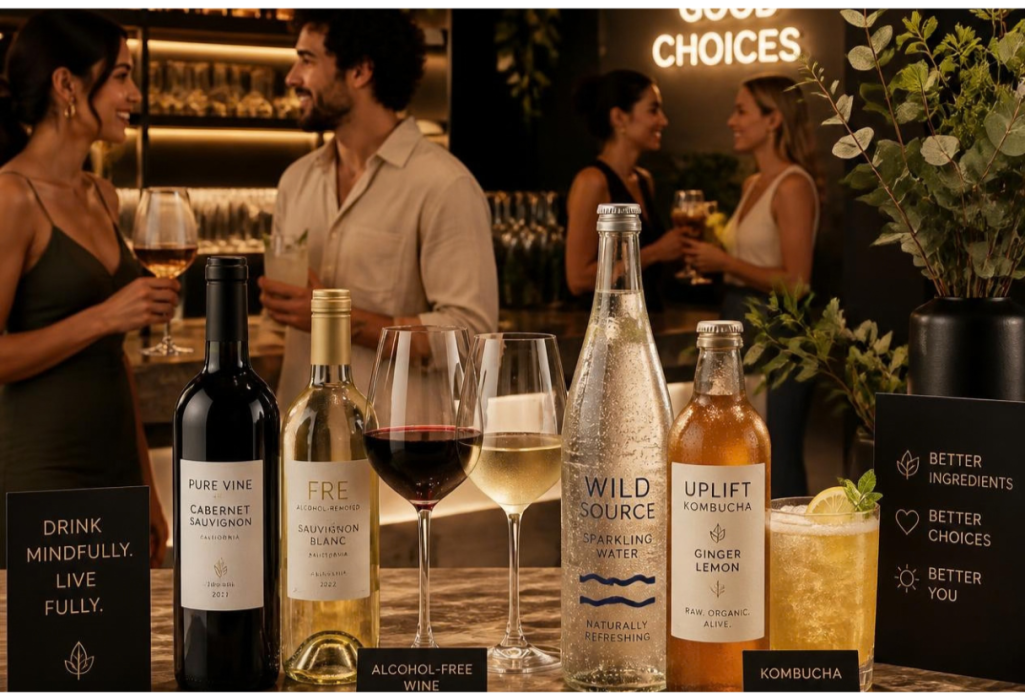
Depending on the occasion, they may choose wine, alcohol-free wine, beer, an RTD, kombucha, a functional drink, a premium soft drink or another emerging beverage format.
And the decision may have little to do with price.
It may simply be about what feels right for that particular moment.
This is something wine brands cannot afford to ignore.
What does this mean for wine producers?
We do not believe the answer is that every winery should suddenly launch a no- or low-alcohol range.
For some producers, that may make sense.
For others, it may not.
The more useful question is:
Where does my wine fit into the changing drinking habits of consumers?
That can lead to very different answers.
For one winery, it could mean developing a lower-alcohol wine.
For another, it could mean focusing on lighter, fresher styles that respond naturally to changing preferences.
For another, the opportunity may be in smaller formats, different packaging, stronger food-pairing positioning or simply communicating the wine's existing strengths in a more relevant way.
And for many producers, the answer may be to stay firmly within traditional wine — but to become more precise about the consumer and occasion they are targeting.
There is no single solution.
Export strategy starts with the market - but should end with the consumer
When entering a new market, the first questions are often very practical:
What is the target price?
Which wines are selling?
Who are the main competitors?
Which retailer or importer should we approach?
All of these questions matter.
But there is another layer that can make a significant difference:
What role does this wine have in the local drinking culture?
A wine that works well in one market may need a completely different positioning in another.
The preferred styles, formats, price points and occasions can vary significantly between countries.
This is why export development is not simply about finding a buyer for an existing product.
It is about finding the right market, consumer, occasion and commercial partner for that product.

Premium does not have to mean more alcohol
Another interesting aspect of the no- and low-alcohol movement is that moderation does not necessarily mean moving away from premium experiences.
Consumers can still value provenance, quality, craftsmanship, authenticity and distinctive flavours when choosing what to drink.
These are all areas where wine has traditionally been strong.
Terroir. Origin. Heritage. Craftsmanship. Food pairing. Storytelling.
These values remain relevant even as the wider drinks landscape changes.
For wine producers, this creates an opportunity to focus not only on alcohol content, but on the overall experience surrounding the product.
A wine does not have to become something completely different to remain relevant.
It may simply need to become more relevant to the right consumer and the right occasion.
The future is not necessarily “no alcohol”
The rise of no- and low-alcohol beverages is an important development, but it should not be interpreted as the end of traditional wine.
Wine remains deeply connected to food, hospitality, celebration, culture and social occasions.
There will continue to be consumers who actively seek classic wine styles, premium bottles, distinctive origins and wines with a strong sense of place.
The opportunity for the industry is therefore not necessarily to replace traditional wine.
It is to understand how traditional wine fits into a drinks market that is becoming more diverse.
For some wineries, innovation will be the answer.
For others, sharper positioning will be more important.
And for many, the most valuable step may simply be gaining a better understanding of the markets they want to enter.
Staying relevant starts with understanding the market
Circana's recent research shows that moderation and changing drinking occasions are becoming important factors in the European beverage landscape. Its work also highlights the growing relevance of no- and low-alcohol and functional beverage categories.
But for wine producers, the takeaway is not simply that consumers are drinking less.
It is that consumers are making more deliberate choices about what they drink and when.
For an export-focused winery, this can be a valuable way to look at international growth.
Instead of asking only:
“Where can we sell this wine?”
it may be worth asking:
“Where does this wine make sense?”
Which market?
Which consumer?
Which occasion?
Which price point?
Which partner?
At MOVIN, this is the kind of thinking we believe matters when connecting producers with international markets.
Because successful export is not only about finding a market for a wine.
It is about finding the right place for that wine in the market.
Sources
- Circana, October 2025 — 71% of Europeans are drinking less alcohol, while a generational shift forces beverage brands to rethink growth
Circana – original publication - Circana, August 2025 — From booze-free bubbles to TikTok teas: the surprising new ways Europe is drinking this summer
Circana – original publication - Vinexposium / Ananda Roy, April 2026 — The rise of low and no – Is wine ready for a moderating world?
Vinexposium – original article
#WineBusiness #WineExport #WineIndustry #WineTrends #WineMarketing #WineTrade #InternationalWine #WineMarket #WineConsumers #NoAndLow #BeverageTrends #MOVINAgency